Imagine landing in Tokyo, the neon lights of Shinjuku humming around you, and being able to strike up a conversation with a local ramen chef as if you’d spent years studying Japanese. Not long ago, this was the stuff of Star Trek—the “Universal Translator” finally brought to life. Today, it’s a reality tucked inside a small plastic case in your pocket.
We often get asked by our community at Jesebang, “Is it actually magic, or just a really fast app?” The truth is a fascinating blend of high-speed hardware and sophisticated AI that works faster than the human brain can process a pause. If you’ve ever wondered about the “brain” inside your gear, let’s break down exactly how translation earbuds work to bridge the world’s language gaps.
The Four-Step “Magic” Pipeline
To understand how translation earbuds work, you have to look at the invisible relay race happening every time you speak. From the moment a sound wave hits the microphone to the second a translated voice whispers in your ear, four distinct technologies are working in perfect harmony.
1. Advanced Voice Capture (The “Ear” of the AI)
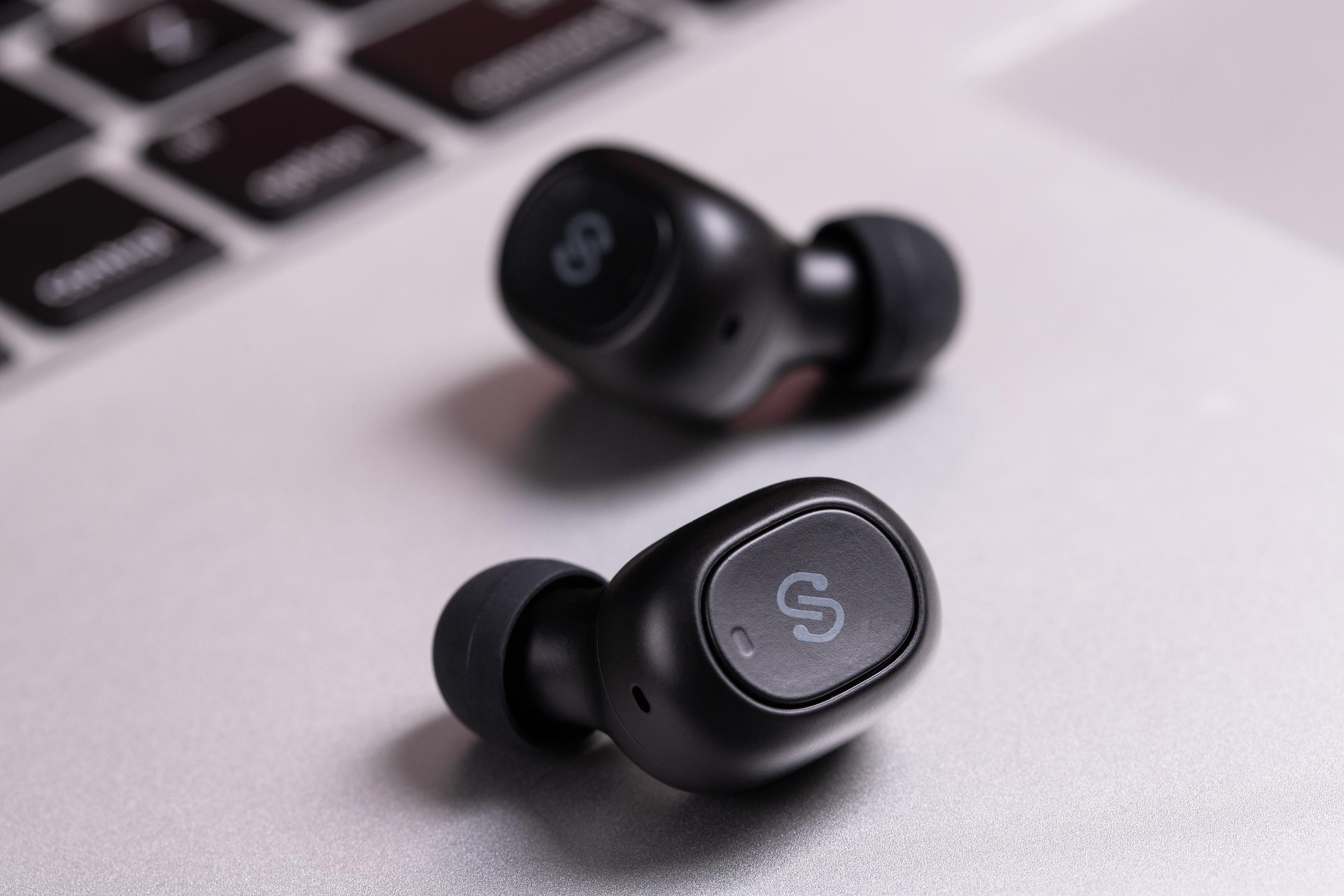
It all starts with the hardware. Unlike standard headphones, translation-ready earbuds like those in the Jesebang lineup utilize high-sensitivity microphone arrays. Most use Beamforming Technology, which digitally “aims” the microphone at your mouth while ignoring the honking cars or bustling cafe noise around you. If the AI can’t hear you clearly, it can’t translate you accurately.
2. Automatic Speech Recognition (ASR)
Once your voice is captured, the ASR engine converts those acoustic waves into digital text. In 2026, this technology has reached a point where it can distinguish between homophones (like “their” and “there”) based on the context of your sentence.
3. Neural Machine Translation (NMT)
This is where the real heavy lifting happens. The digital text is sent to a translation engine—often powered by a smartphone app or a dedicated cloud server. Unlike old-school translators that swapped words one-by-one (often resulting in “word salad”), NMT looks at the entire sentence structure. It understands idioms, tone, and grammar, ensuring that “break a leg” is translated as a wish for good luck, not a medical emergency.
4. Text-to-Speech (TTS)
Finally, the translated text is converted back into audio. Modern TTS has moved past the “robotic” voices of the past. You now hear natural intonations and human-like rhythms, delivered directly into the listener’s earbud.
Why Hardware Quality Matters for Translation
You might think, “Can’t I just use an app on my phone?” While apps are great for reading menus, they fail in real-world conversations for one major reason: Environmental Noise.
This is where the Jesebang engineering philosophy comes into play. For a translation to be 99% accurate, the input signal must be pristine. Our earbuds feature Environmental Noise Cancellation (ENC) and Bluetooth 5.3 stability.
- Zero Latency: High-speed Bluetooth chips ensure the data travels from your ear to the phone and back in milliseconds.
- Battery Endurance: Translation is a power-hungry process. With the 40-hour battery life found in Jesebang models, you can navigate a full day of international business meetings without fearing a mid-sentence shutdown.
Breaking Down the Modes: How You’ll Actually Use Them
Knowing how translation earbuds work technically is one thing, but how do they function in a real conversation? Most systems offer three primary ways to communicate:
Touch Mode for One-on-One
In this mode, you tap your earbud, speak your sentence, and then release. The translation is then played through your phone’s speaker or the other person’s earbud. This is perfect for high-noise environments like busy markets where the AI needs a “signal” of when to start and stop listening.
Listen Mode for Speeches
If you’re at a conference or a lecture, the earbuds act as a continuous stream. They “listen” to the speaker and provide a constant, low-latency translation directly into your ear. It’s essentially like having a private interpreter sitting on your shoulder.
Speaker Mode for Quick Interactions
This is the “tourist favorite.” You wear the earbuds, speak your question (like “Where is the nearest train station?”), and the translation is broadcasted loudly through your phone’s speaker for the local to hear. When they reply, the phone captures their voice and sends the translation back to your Jesebang earbuds.
Pro-Tips for Maximum Accuracy
Even the best tech needs a little help from its user. If you want to get the most out of your translation gear, keep these expert tips in mind:
- Mind the Humidity: Extreme moisture can sometimes muffle microphone ports. If you’re using your earbuds in a tropical climate, ensure they have a high waterproof rating (like the IP7 rating on Jesebang products) to keep the internal components dry and the audio crisp.
- Short, Clear Sentences: While AI has improved, it still struggles with “run-on” sentences. Speaking in clear, concise thoughts helps the NMT engine maintain 100% accuracy.
- Keep Your Firmware Updated: Translation algorithms are updated almost weekly. Regularly syncing your earbuds with their companion app ensures you’re using the latest “vocabulary” packs.
The world is getting smaller, and the “language barrier” is becoming a relic of the past. By understanding how translation earbuds work, you’re not just buying a gadget—you’re unlocking the ability to connect with anyone, anywhere, at any time. Ready to start your next adventure? Your Jesebang earbuds are ready when you are.